Showing posts with label Social. Show all posts

Wednesday, December 16, 2020

The High Costs of Healthcare

 "Low-Cost Hospital Design" simply does not yield the same search results as "Low-Cost Housing Design." I could go into the details for why that happens, but one can verify this for themselves. What I will say is that if health care is as much of a basic right as housing, then this does not make sense. The issue is that we are, for the most part, ready to make compromises in housing. We are okay with choosing lower cost materials, using more efficient means of production, reducing the programmatic requirements, and so on. With healthcare, we are reluctant to do the same. With healthcare, everything must be state-of-the-art and high-tech, or else we are scared we'll be in danger. This attitude is now prevalent everywhere. In India, where private hospitals with higher standards of. well, everything have come up in very large numbers in the past two decades, this "nothing but the best" attitude has started to foster distrust towards low-cost public health initiatives like government hospitals and vaccination drives. Needless to say, this distrust isn't helping anybody. The reality is that not everyone can afford "state-of-the-art" and "nothing-but-the-best," and truth be told, not everyone always needs "state-of-the-art" and "nothing-but-the-best." There are many health issues that can be treated with minimal infrastructure as long as people have access to basic services, and hospital design doesn't need to be laborate to provide these services.


What we need are small-scale, easily replicable building designs that can be deployed over diverse territories with ease. These buildings need only to cater to common, easily treatable or routine illnesses and conditions. It must be kept in mind that in many poorer countries, death or prolonged illness are not the result of a lack of the best care but the lack of access to basic care. One would be shocked to know how often children die from diarrhea which can easily be treated if one just has access to basic healthcare. Waiting for hospitals--and the innovations and budgets needed to build hospitals everywhere--is killing people when small clinics can do so much. Using cheap but durable materials and easy methods of construction, clinics need to be built everywhere so that hospitals are needed only in case of more serious illnesses. Lowering high standards of health care infrastructure can ironically be the key to improving public health, and it is high time we embrace this irony.


Sunday, November 15, 2015

Designing a School in Africa-Part 2

Stage 1: Site Study

Since the proposed school can be located in any out of a list of countries in Africa, we were not given a specific site. So, we had to work with two points of focus:

1. The site was in Africa
ii. It had tropical savannah climate.

It doesn't sound like much, but even something like this can take lots of research.

First of all, I have never been to Africa. Nor do I know anything about it's architecture. I was relying on the Internet, and the Internet can be pretty annoying sometimes.

Let's start out with the first point. Africa. What does that mean? What needs to be studied?

What I did first was study the traditional forms of architecture that prevail in Africa. No matter how modern we become, it's not very respectful to replace thousands of years of knowledge with just a few decades of technological know-how. If Africans have been building their structures a certain way for a long time, there must be a reason for it.

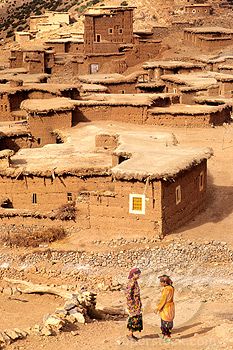
One of my sources was africanvernaculararchitecture.com. Following are some pictures which might help you get a better understanding of architecture in Africa:


I didn't go much into the details at the pictures stage, because sometimes, not knowing too much helps you learn. For example, from here I learnt  (without readind a single line of text), that mud would be a more feasible building material than bamboo (which would have been ideal for, say, Bali). Also, I learnt that that there's a fluidity in vernacular architecture design, that voids in the walls are a repeating characteristic, thatch-roofing may just work etc. These were just clues picked up by my subconscious.

But the pictures couldn't dictate my design. My design needed to be my own, and to make informed decisions regarding my design, I started with the online research phase. And this included lots and lots of text.

The truth is that this stage can go on forever. There's no end. You might be halfway through drafting your design and then you go, Oh, can this tree really be here? And that leads to an hour on the Internet researching the fauna of Africa.

So, what did I learn during this stage?

1. That I was right. Mud really is my best friend. I decided to go with adobe brick construction with mud plastering.
2. That Africa isn't the jungle we all believe it to be. In fact, it's got lots of grasslands and deserts, which meant that picking out trees would be a task.
3. Walled compounds fit better with the context.
4. Water is a huge problem in Africa, which meant finding a solution to provide drinking water for the students in the school.

Four points of focus. That's enough to work with for now. Stay tuned to know how these four points eventually affected my design.

Sources:
www.africanvernaculararchitecture.com
http://www.architectural-review.com/essays/the-fabulous-diversity-of-vernacular-architecture-along-the-west-coast-of-africa/8603280.article
Pinterest
and more....

Designing a School in Africa- Part 1

It's rare to see a girl doing her internship also participating in competitions. For a lot of architecture students in India, internships are the first away-from-home experience and that can be stressful for a lot of reasons. But my first such experience came a long time ago, and now, coming to an unfamiliar environment isn't quite unfamiliar anymore. Also, after eight years, I returned to Delhi for my internship, and even though I found the city to be quite different this time around, I was also more at home than my classmates. I discovered I had enough time to work and cook and clean and participate in a couple of competitions.

The first one was IGBC Design Competion, for a theme to design GREEN TRANSIT SHELTERS FOR CONSTRUCTION SHELTERS. Our team lost, but that's okay because this was my first competition, and my first experience designing something with joy. Before submission, I was happy with my work, and the truth is that it helped me learn a lot. Sometimes, I believe that the fear of being judged at vivas keeps us from taking risks with our designs. When that fear is gone, we're all capable of more creativity than we know. Was our design perfect? Of course not. Frankly, it sucked. But I learnt a lot nevertheless.

After IGBC was over, I started looking for more competitions. My criteria were i. Nothing too big (like IT Park in Silicon Valley or Human Shelter on the Freaking Moon) and ii. Nothing that has a registration fee. I came across this competition that was open to all and taking place on an international platform. It was to design a school in the tropical savannah climate of Africa. I had just helped out with the design of Takhel Children's Home, and this was something similar. So, I decided this was what would keep me occupied for the next month.

I knew I wouldn't be able to give the competition the time it deserved, because I was just a month away from the deadline. But sometimes it really is more important to just learn.

The countdown has begun. Submission is two weeks away and I am almost finished with my work. Now it's all just photoshop and rendering and presentation.

For the next two weeks, I will be blogging about the process that went into designing the school. I don't know if it will be helpful to anyone but I hope it is. Think of it as my guide to designing a school in Africa. I'll be talking about the research that went into it and my own thought process and ideas. From the study stage, I'll move to the concept stage and then on to the final stage, where I'll show you the sheets I prepared.

Stay tuned for more.

Tuesday, September 29, 2015

As An Architect, I propose...

It's great that the current central government is giving so much impetus to Internet accessibility for all. Today, all our information comes from the Internet. Access to Internet can easily divide the population to haves and have-nots, because one side is so dependent on it and uses it just as much as other essential resources, while the other side barely has any idea how to use it.

There's a lot that can be done for the development of this country. I'm no economics graduate. My ideas are obviously flawed. Nevertheless, I'd like to share some of my ideas for the progress of India, and hope PM Modi takes note. (Yeah, right!)

1. Solar Power for all Urban Households

India under-utilizes the solar power available to it. That's not an observation; it's a fact. According to Wikipedia:

With about 300 clear, sunny days in a year, India's theoretically calculated solar energy incidence on its land area alone, is about 5,000 trillion kilowatt-hours (kWh) per year (or 5 EWh/yr).[1][2][3] The solar energy available in a year exceeds the possible energy output of all fossil fuel energy reserves in India. The daily average solar power generation capacity over India is 1.0 kWh/m2, which is equivalent to about 1,500–2,000 peak (rated) capacity operating hours in a year with the available commercially-proven technologies.

How many fo us actually use solar power? Do we have it in our homes? It takes money to install, but many of us can afford it. And once it's installed, we get electricity for the rest of our lives without paying lofty bills. It all sounds good, but the fact is that the use of solar energy hasn't been promoted as it should be. Newspapers and blogs are questioning whether it will reach rural areas soon, but my point is that given the hundreds of thousands of housing societies and houses in major cities, and the out-of-proportion large quantities of power they use, wouldn't it make sense to make it mandatory for all of them to use solar power. The cost of the solar panels plus installation can go up to 3 lakhs, but how much is that when you consider that flats in Delhi and Mumbai these days can cost more that 1 crore these days? So maybe, if we start with upper-middle to high-class residential areas, major office complexes and commercial centres, we can reduce our dependence of fossil fuels to a great extent. I mean, one of the major reasons why solar power isn't widely used is the initial cost it entails, so why not start with people and places that can afford it. Whatever money is saved by doing so can be used to give away solar energy to the next economic strata at a lower price, and this tier-based approach to make solar power available to all can continue till we reach the lowermost economic strata. It might sound discriminatory, but it might just work.

An interesting fact: Gujarat (the state which has Narendra Modi as it's former CM), is the leader in Indian solar power generation and usage. Gandhinagar may soon become a solar power city. Gujarat is also home to Asia's largest solar park at Charanka.

2. Make compost toilets cool. 
Most of my non-architect friends can't believe that an average Indian uses approx. 110 L of water in 1 day. In case you're wondering, yes, that's a lot. However, it is the minimum. One of the major culprits for this high demand of water is flush. Flushing once can cause a loss of about 5L of water, which is basically more than we need to drink throughout the day (think about a thirsty kid in a desert somewhere before you flush next time.)

A compost toilet doesn't need you to flush. It separates solids and liquids and decomposes them separately without the use of water. Check this out:


It might seem a bit gross at first, but it's not. In fact, it's very hygienic if you think about the fact that no blackwater is produced here. However, it doesn't go with Indian habits. We are more comfortable with flushing and we don't use toilet paper that often (most people aren't comfortable with it). So how about fund all the IIT's to design a compost toilet that flushes and allows for our tendency to wash and not wipe? It all sounds funny, but each person can save upto 30L of water per day. Think about it.

Once an appropriate compost toilet is designed, maybe it can be marketed and popularized, and we all know Mr. Modi's great with that.

3. Biogas isn't just meant for rural areas.


We talk about biogas like they belong to the villages, but there's no reason for why urban areas cannot use them. We can use biogas at least to cook food, but the simple DIY types of biogas generators are messy and hard to maintain. We need proper plants at key locations that can supply biogas to a number of homes. Might take some time, might not even replace LPG completely, but it's a start.

For information on biogas generated electricity, check this out.

4. Double-use schools.
Instead of building new structures every time we need to a vocational training centre or community hall, just use school buildings in the evenings. School's out by 4, and after that, the building just stands in it's place. It would be much more useful if we could have adult education classes there, and the building should be designed in order to be used for various purposes. Even tutoring services can be provided. If a school is a temple of learning, let's make sure it's open to all 24/7. And this goes for private schools too. If nothing else, the school courtyards and corridors can serve as sleeping areas for the homeless at night.

5. Solar power the buses.
When I was young, Delhi decided to embrace CNG buses and autorickshaws and, yes, it did make a difference. It's been almost two decades since then, and we're still running on CNG. It's about time we started using solar transportation. And don't talk about money. We pay taxes when we earn and more taxes when we spend. Use it wisely, and very soon each and eveyr bus will be solar-powered.